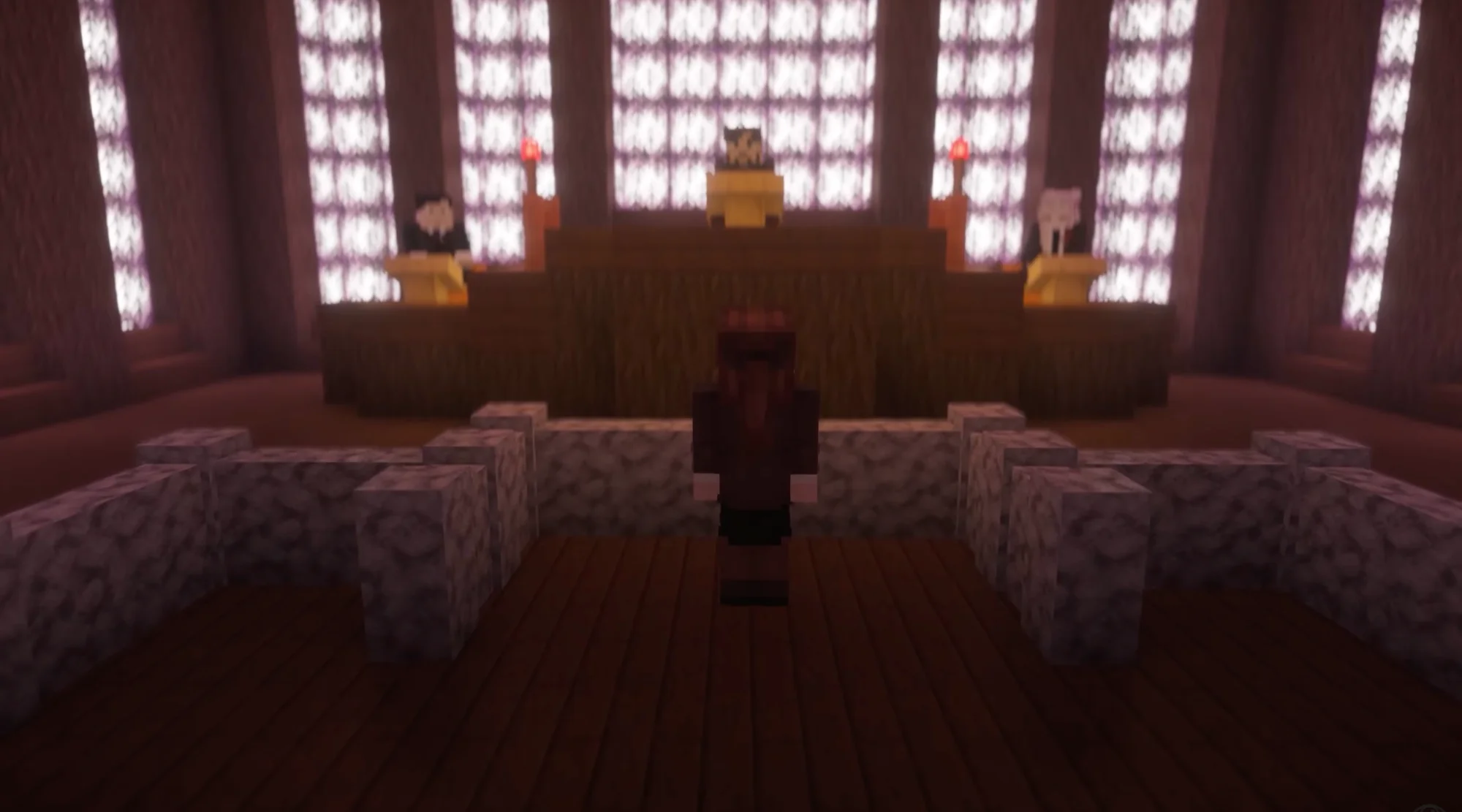
Vanished is a thriller and mystery series set in the Pursuing Evidence universe, intertwining family tragedy with institutional secrets. The series follows former IAA agent Bora Aksoy as he returns to the dark past he left behind years ago after his son disappears, revealing how the Aksoy family was torn apart in the shadow of a secret organization.
Vanished does something the larger Pursuing Evidence universe rarely has room for: it tells one story, about one family, and finishes it. A father wakes up planning a modest birthday breakfast. By the end, his son has been renamed by an institution, his dead wife is his supervisor, and his oldest friend is boarding a car to another city. Every step between those points follows from the one before it.
It works on its own. You don't need to know anything about Superseed to feel the weight of a speech rehearsed in a mirror, a hand pressed against blast-proof glass, or a teenager telling a frightened girl that "the first night is always the hardest." The writing trusts silences, lets its characters be wrong, and never turns grief into a plot device.
For viewers who already know Pursuing Evidence, it is also a key that unlocks the main series. Hüseyin's quiet guilt, the agent numbers, Stratton's road to Superseed and the IAA's habit of absorbing people all look different afterward. Its reliance on screens of recovered messages and its crowded final setup are real flaws, but they are small ones. This is the strongest entry in the universe so far, and the best place to start.
fadein · Oct 3, 2026
9/10Editorial review
A Family Mystery Built on the Cost of Disappearing
Vanished presents itself as a missing-person thriller, but its real subject is absence: the people who leave, the people forced to live around that absence, and the damage done when disappearance is mistaken for protection. Elias Aksoy vanishing on his eighteenth birthday provides the immediate mystery, yet the series quickly establishes that he is not the first person to disappear from this family. Vivienne Moreau has been presumed dead for eight years, Bora has never emotionally escaped the night he lost her, and Elias has grown up inside a grief that existed before he was old enough to understand it.
That foundation gives the mystery unusual dramatic weight. Bora and Hüseyin’s search gradually reveals that Elias was not simply abducted. Aaron Kline spent months identifying and cultivating the resentment already present in him, offering attention, autonomy and “purpose” until leaving home could be framed as an act of self-determination. The writing is strongest when it refuses to make that manipulation simplistic. Kline lies constantly, but his most effective observations are often based on uncomfortable truths. Bora loves his son, yet much of their home has remained organized around Vivienne’s absence. Elias is manipulated, but he also begins repeating Kline’s methods with Riley. Victimhood and responsibility are allowed to exist in the same character without cancelling each other out.
Vivienne’s return transforms the series from a disappearance investigation into something more painful. Bora discovers that the wife he mourned was alive while Elias discovers that the mother whose death shaped his childhood has become a stranger standing in front of him. The series wisely resists easy reconciliation. Facts can be corrected immediately; eight years of lived experience cannot. Elias responding to Vivienne’s revelation with “My mother died” captures the central tragedy more effectively than any exposition could: biologically she has returned, but the mother he knew exists only as memory, photographs and grief.
The finale extends that idea from family into institution. Bora and Vivienne learn that both of them once believed they were sacrificing something to save their family, only for those choices to help destroy the life they intended to preserve. Bora’s decision to kill Kline is similarly denied the satisfaction of revenge. He eliminates the man who manipulated Elias but also destroys the witness who could have exposed the larger network. Meanwhile, the IAA responds to the crisis by converting people into operational assets: Elias is assigned an identity he explicitly rejects, and Bora is pulled back into the organization he had once tried to escape. No one truly recovers ownership of the life they were fighting for.